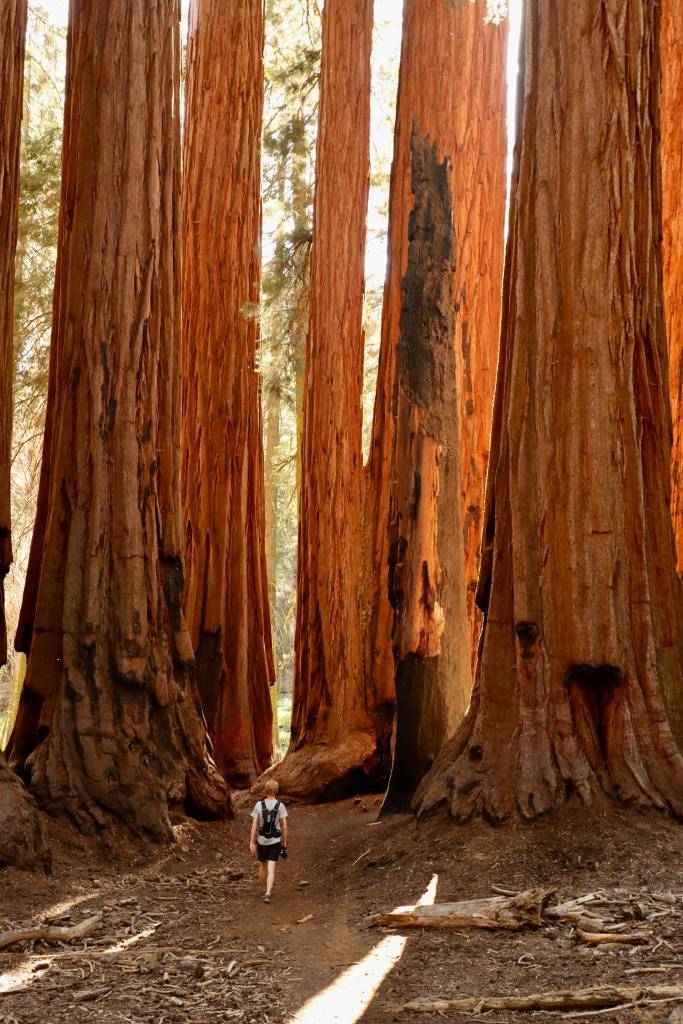
It really is amazing to me how many things in nature survive. The adaptations and the way that plants and animals are so intricately designed to live for hundreds and thousands of years really are wonderful! In today’s blog, Mr. Avis shares his thoughts and perspectives on one of the oldest living things in the world…the great Sequoias of California. There are countless lessons that we can learn from our natural world, here’s one of them 🙂
“Most people think sequoias survive because they’re massive.
But that’s not even close to the real reason.
If you’ve ever had the privilege standing beside one of these giants, you’ll find it hard NOT to think of resilience.
These trees can live through droughts, fires, storms, and climate shifts that would kill almost anything else.
But as an engineer this is what I’m fixated on:
The tallest tree in the world has roots that only go 6-12 feet deep.
That should be impossible. A 300-foot tree with shallow roots makes no sense from an engineering perspective.
But… Sequoias don’t survive alone.
Their root systems spread 50-80 feet wide and interweave with every other sequoia around them.
They share nutrients, water, and structural support. When storms come in, they support each other.
The forest is the system: Not the individual trees.
I couldn’t stop thinking about this.
Most people try to build resilience by making themselves bigger, stronger, more independent. They stockpile resources, they build higher walls, they go it alone.
But the most resilient systems in nature are interconnected.
Maybe the question isn’t “how do I become more self-sufficient?” but “how do I become more meaningfully connected to the right systems?”” – Rob Avis
Photo by Johan Van Geijl: https://www.pexels.com/photo/sequoia-national-park-california-united-states-14946335/

 My Good Time Stories
Like What You Read? Leave a Reply :)