I am a 61 year old, father of two boys and have been happily married for 33 years. I have been a Physical Education teacher and coach for 38 years and have loved EVERY minute of it. I enjoy making people laugh and feel good about themselves. It’s fun collecting inspiring and heartwarming stories.from people. So, if you have a good story…let me know! I hope you enjoy my page!! :)
Remember:
Everyone is fighting a battle that you know nothing about.
Be kind.
Always.
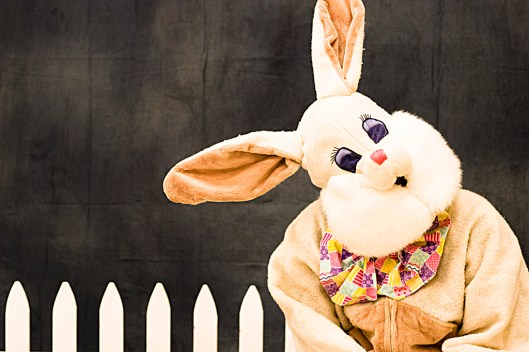
Throughout my life, I have been blessed to listen to many inspiring, motivational, and heartwarming speakers. I have met a lot of famous people and rubbed elbows with the “rich and famous.” But of all the people that I have ever met and listened to, none of them were more inspirational than one of the most well known entities of all-time…that’s right…the Easter Bunny,
It is my hope that these great words of wisdom will touch your heart as much as they do mine 🙂
——————-
What I learned from the Easter Bunny……
Don’t put all your eggs in one basket.
Everyone needs a friend who is all ears.
There’s no such thing as too much candy.
All work and no play can make you a basket case.
A cute tail attracts a lot of attention.
Everyone is entitled to a bad hare day.
Let happy thoughts multiply like rabbits.
Some body parts should be floppy.
Keep your paws off of other people’s jelly beans.
Good things come in small, sugar coated packages.
The grass is always greener in someone else’s basket.
To show your true colors, you have to come out of the shell.
The best things in life are still sweet and gooey.
May the joy of the season fill your heart.
———–
Remember: “A true friend is someone who thinks you are a good egg even though they know you are slightly cracked.” 🙂
This is an encouraging illustration for obedience, preserverance, faith and long-suffering. It will demonstrate to you the importance of maintaining your faith and patience with adversities that may come into your life.
A man was sleeping at night in his cabin when suddenly his room filled with light, and God appeared. The Lord told the man he had work for him to do, and showed him a large rock in front of his cabin. The Lord explained that the man was to push against the rock with all his might.
So, this the man did, day after day.
For many years he toiled from sun up to sun down, his shoulders set squarely against the cold, massive surface of the unmoving rock, pushing with all of his might. Each night the man returned to his cabin sore and worn out, feeling that his whole day had been spent in vain.
Since the man was showing discouragement, the Adversary (Satan) decided to enter the picture by placing thoughts into the weary mind: “You have been pushing against that rock for a long time, and it hasn’t moved.”
Thus, he gave the man the impression that the task was impossible and that he was a failure. These thoughts discouraged and disheartened the man.
Satan said, “Why kill yourself over this? Just put in your time, giving just the minimum effort; and that will be good enough.”
That’s what the weary man planned to do, but decided to make it a matter of prayer and to take his troubled thoughts to the Lord. “Lord,” he said, “I have labored long and hard in your service, putting all my strength to do that which you have asked. Yet, after all this time, I have not even budged that rock by half a millimeter. What is wrong? Why am I failing?”
The Lord responded compassionately, “My friend, when I asked you to serve Me and you accepted, I told you that your task was to push against the rock with all of your strength, which you have done. Never once did I mention to you that I expected you to move it. Your task was to push.
And now you come to Me with your strength spent, thinking that you have failed. But, is that really so? Look at yourself. Your arms are strong and muscled, your back sinewy and brown; your hands are callused from constant pressure, your legs have become massive and hard. Through opposition you have grown much, and your abilities now surpass that which you used to have. True, you haven’t moved the rock. But your calling was to be obedient and to push and to exercise your faith and trust in My wisdom. That you have done. Now I, my friend, will move the rock.”
At times, when we hear a word from God, we tend to use our own intellect to decipher what He wants, when actually what God wants is just a simple obedience and faith in Him. By all means, exercise the faith that moves mountains, but know that it is still God who moves mountains.
When everything seems to go wrong . just P.U.S.H.!
When the job gets you down … just P.U.S.H.!
When people don’t react the way you think they should … just P.U.S.H!
When your money is “gone” and the bills are due….just P.U.S.H!
When people just don’t understand you, just P.U.S.H.
It is a sad reality in today’s world but more and more people have decided that having a relationship with God isn’t worth it. It is a waste of time and that there are other things in their lives that are more important. In addition, a good number of individuals don’t think too highly of God’s son, Jesus. They believe he was just a soft-spoken, wimpy-type man who didn’t have the guts to stand up to anyone and just had an easy life here on earth.
Most people know that Jesus was crucified on a cross but not many people REALLY know the unimaginable amount of pain and suffering that he endured before He died.
He following account is a vivid description of what it was like to be whipped / scourged then crucified on a cross…much in the same ways that Jesus experienced. The descriptions of these procedures are pretty graphic, so read on with caution…but I want you to remember this: Jesus went through all of this because HE LOVES YOU. If you were the only person to ever have inhabited the earth…He would have still have gone through this…for you!!
———————-
The physical trauma of Christ begins in Gethsemane with one of the initial aspects of His suffering – the bloody sweat. It is interesting that the physician of the group, St. Luke, is the only one to mention this. He says, “And being in agony, He prayed the longer. And his sweat became as drops of blood, trickling down upon the ground.”
Though very rare, the phenomenon of hemathidrosis, or bloody sweat, is well documented. Under great emotional stress, tiny capillaries in the sweat glands can break, thus mixing blood with sweat. This process alone could have produced marked weakness and possible shock.
After the arrest in the middle of the night, Jesus was brought before the Sanhedrin and Caiaphas, the High Priest. A soldier struck Jesus across the face for remaining silent when questioned by Caiaphas. The palace guards then blindfolded Him and mockingly taunted Him to identify them as they each passed by; they spat on Him and struck Him in the face.
Condemned to Crucifixion
In the early morning, Jesus, battered and bruised, dehydrated, and exhausted from a sleepless night, was taken across Jerusalem to the Praetorium of the Fortress Antonia. It was there, in response to the cries of the mob, that Pilate ordered Bar-Abbas released and condemned Jesus to scourging and crucifixion.
Flogging First
Preparations for the scourging are carried out. The prisoner is stripped of His clothing and His hands tied to a post above His head. The Roman legionnaire steps forward with the flagrum in his hand. This is a short whip consisting of several heavy, leather thongs with two small balls of lead attached to the ends of each. The heavy whip is brought down with fill force again and again across Jesus’ shoulders, back and legs.
At first the heavy thongs cut through the skin only. Then, as the blows continue, they cut deeper into subcutaneous tissues, producing first an oozing of blood from the capillaries and veins of the skin, and finally spurting arterial bleeding from vessels in the underlying muscles. The small balls of lead first produce large, deep bruises which are broken open by subsequent blows.
Finally the skin of the back is hanging in long ribbons and the entire area is an unrecognizable mass of torn, bleeding tissue. When it is determined by the centurion in charge that the prisoner is near death, the beating is stopped.
The half-fainting Jesus is then untied and allowed to slump to the stone pavement, wet with His own blood. The Roman soldiers see a great joke in this provincial Jew claiming to be a king. They throw a robe across His shoulders and place a stick in His hand for a scepter. A small bundle of flexible branches covered with long thorns is pressed into His scalp.
Again there is copious bleeding (the scalp being one of the most vascular areas in the body). After mocking Him and striking Him across the face, the soldiers take the stick from His hand and strike Him across the head, driving the thorns deeper into His scalp. Finally, they tire of their sadistic sport and the robe is torn from his back. This had already become adherent to the colts of blood and serum in the wounds, and its removal, just as in the careless removal of a surgical bandage, cause excruciating pain – almost as though He were again being whipped, and the wounds again begin to bleed.
The Walk to Crucifixion
The heavy beam of the cross is then tied across His shoulders, and the procession of the condemned Christ, two thieves and the execution detail, begins its slow journey, The weight of the heavy wooden beam, together with the shock produced by copious blood loss, is too much. He stumbles and falls. The rough wood of the beam gouges into the lacerated skin and muscles of the shoulders. He tries to rise, but human muscles have been pushed beyond their endurance.
The Nails of Crucifixion
At Golgotha, the beam is placed on the ground and Jesus is quickly thrown backward with His shoulders against the wood. The legionnaire feels for the depression at the front of the wrist. He drives a heavy, square, wrought-iron nail through the wrist and deep inot the wood. Quickly, he moves to the other side and repeats the action, being careful not to pull the arms too tightly, but to allow some flexion and movement. The beam is then lifted in place at the top of the posts and the titulus reading “Jesus of Nazareth, King of the Jews” is nailed in place.
The Pain of Crucifixion
The left foot is pressed backward against the right foot, and with both feet extended, toes down, a nail is driven through the arch of each. As he pushes Himself upward to avoid the stretching torment, He places His full weight on the nail through His feet. Again there is the searing agony of the nail through His feet. Again there is the searing agony of the nail tearing through the nerves between the metatarsal bones through the feet.
Crucifixion – The Medical Effects
As the arms fatigue, great waves of cramps sweep over the muscles, knotting them in deep, relentless, throbbing pain. With these cramps comes the inability to push Himself upward. Hanging by His arms, the pectoral muscles are unable to act. Air can be drawn into the lungs, but cannot be exhaled. Jesus fights to raise Himself in order to get even one short breath. Finally, carbon dioxide builds up in the lungs and in the blood stream and the cramps partially subside. Spasmodically, He is able to push Himself upward to exhale and bring in the life-giving oxygen.
Hours of this limitless pain, cycles of twisting, joint-rending cramps, intermittent partial asphyxiation, searing pain as tissue is torn from His lacerated back as He moves up and down against the rough timber. Then another agony begins. A deep crushing pain deep in the chest as the pericardium slowly fills with serum and begins to compress the heart.
The compressed heart is struggling to pump heavy, thick, sluggish blood into the tissues – the tortured lungs are making a frantic effort to gasp in small gulps of air. The markedly dehydrated tissues send their flood of stimuli to the brain. Jesus gasps, “I thirst.”
Crucifixion – The Last Gasp
He can feel the chill of death creeping through His tissues. With one last surge of strength, He once again presses His torn feet against the nail, straightens His legs, takes a deeper breath, and utters His seventh and last cry, “Father, into thy hands I commit my spirit.”
Apparently to make doubly sure of death, the legionnaire drove his lance through the fifth interspace between the ribs, upward through the pericardium and into the heart. Immediately there came out blood and water. We, therefore, have rather conclusive post-mortem evidence that Out Lord died, not the usual crucifixion death by suffocation, but of heart failure due to shock and constriction of the heart by fluid in the pericardium.
Condensed from “The Crucifixion of Jesus Christ” by C. Truman Davis, M.S. March, 1965. Source: ethoughts.org
—————— The GREAT NEWS about this story is that three days after Jesus died, HE ROSE AGAIN and was seen by more than 500 people. THAT is what makes a relationship with God and Jesus so special…We worship a LIVING God!! and we can communicate with Him at anytime.
THAT is the real story of Easter…and the story of the God that I love and serve.
”For God so loved the world that He gave His only begotten Son, that whosoever believes in Him WILL NOT PERISH but WILL HAVE…ETERNAL LIFE! ~ John 3:16
Life can be tough. There are times in all of our lives that situations, people or circumstances can seem unbearable, horrendous, or intolerable. There are usually two things that a person can do in these situations and the choices that they make will generally create them into the kind of person they are…a positive or negative individual. The following inspiring, true story of Steven Callahan, as told by Adam Kahn on insprationalstories.com, demonstrates the power of positive thinking and the will to live in a very difficult situation
In 1982, Steven Callahan was crossing the Atlantic alone in his sailboat when it struck something and sank. He was out of the shipping lanes and floating in a life raft, alone. His supplies were few. His chances were small. Yet when three fishermen found him seventy-six days later (the longest anyone has survived a shipwreck on a life raft alone), he was alive — much skinnier than he was when he started, but alive.
His account of how he survived is fascinating. His ingenuity — how he managed to catch fish, how he fixed his solar still (evaporates sea water to make fresh) — is very interesting.
But the thing that caught my eye was how he managed to keep himself going when all hope seemed lost, when there seemed no point in continuing the struggle, when he was suffering greatly, when his life raft was punctured and after more than a week struggling with his weak body to fix it, it was still leaking air and wearing him out to keep pumping it up. He was starved. He was desperately dehydrated. He was thoroughly exhausted. Giving up would have seemed the only sane option.
When people survive these kinds of circumstances, they do something with their minds that gives them the courage to keep going. Many people in similarly desperate circumstances give in or go mad. Something the survivors do with their thoughts helps them find the guts to carry on in spite of overwhelming odds.
“I tell myself I can handle it,” wrote Callahan in his narrative. “Compared to what others have been through, I’m fortunate. I tell myself these things over and over, building up fortitude….”
I wrote that down after I read it. It struck me as something important. And I’ve told myself the same thing when my own goals seemed far off or when my problems seemed too overwhelming. And every time I’ve said it, I have always come back to my senses.
The truth is, our circumstances are only bad compared to something better. But others have been through much worse. I’ve read enough history to know you and I are lucky to be where we are, when we are, no matter how bad it seems to us compared to our fantasies. It’s a sane thought and worth thinking.
So here, coming to us from the extreme edge of survival, are words that can give us strength. Whatever you’re going through, tell yourself you can handle it. Compared to what others have been through, you’re fortunate. Tell this to yourself over and over, and it will help you get through the rough spots with a little more fortitude.
There are three numbers that I would like to share with you…just for fun…try and guess what they all have in common.
500
1,300
100,000
Photo Credit” Anthony Cramp via CC Flickr
CONGRATULATIONS! If you guessed the following answers…you WIN! (even of you didn’t it’s fun anyway 🙂
500….this is my 500th post! This s simply unbelieveable to me. I NEVER thought that I would find this much material. The great thing is…I still have A LOT more stories and other things to share!
1,300….This is the numbers of followers who are following my blog! I am very honored and thankful for all of you!
100,000…this is the number of visitors that I have had visit “Good Time Stories.”
I would like to thank you all so very much for all of your support, following and words of encouragement over the past year or so. It makes me feel good knowing that so many people enjoy my blog. I hope that I can continue to post good inspiring, motivation, funny, and heartwarming stories. I have been blessed and for that…I thank you!
Money. Wealth. Big Houses. Big cars. These are just a few things that most people would like to have and are things that most people believe will make them happy. How often do you find yourself thinking…”Wow! Look at that beautiful house” or “I wish I had a cool car like that” or “If I only had a lot of money”, etc.
We should all take the time to think about how fortunate and blessed we really are. In today’s day and age, there is a lot more money and wealth that is available than it was years ago. While there is a great diversity in wealth, riches, and possessions…especially here in the USA, many of us take for granted how well our life really is.
Yesterday, I came across the following story written by Eddie Ogan on websites-host.com. He tells of his life growing up in the 1940’s and proved to me once again, that often times, people that have less material things, are usually the richest!
————
I’ll never forget Easter 1946. I was 14, my little sister Ocy was 12, and my older sister Darlene 16. We lived at home with our mother, and the four of us knew what it was to do without many things. My dad had died five years before, leaving Mom with seven school kids to raise and no money.
By 1946 my older sisters were married and my brothers had left home. A month before Easter the pastor of our church announced that a special Easter offering would be taken to help a poor family. He asked everyone to save and give sacrificially. When we got home, we talked about what we could do. We decide to buy 50 pounds of potatoes and live on them for a month. This would allow us to save $20 of our grocery money for the offering. When we thought that if we kept our electric lights turned out as much as possible and didn’t listen to the radio we’d save money on that month’s electric bill. Darlene got as many house and yard cleaning jobs as possible, and both of us babysat for everyone we could. For 15 cents we could buy enough cotton loops to make three potholders to sell for $1. We made $20 on potholders.
That month was one of the best of our lives. Every day we counted the money to see how much we had saved. At night we’d sit in the dark and talk about how the poor family was going to enjoy having the money the church would give them. We had about 80 people in church, so we figured that whatever amount of money we had to give, the offering would surely be 20 times that much. After all, every Sunday the pastor had reminded everyone to save for the sacrificial offering.
The day before Easter Ocy and I walked to the grocery store and got the manager to give us three crisp $20 bills and one $10 bill for all our change. We ran all the way home to show Mom and Darlene. We had never had so much money before. That night we were so excited we could hardly sleep. We didn’t care that we wouldn’t have new clothes for Easter; we had $70 for the sacrificial offering. We could hardly wait to get to church!
On Sunday morning, rain was pouring. We didn’t own an umbrella, and the church was a mile from our home, but it did not matter how wet we got. Darlene had cardboard in her shoes to fill the holes. The cardboard came apart and her feet got wet. But we sat in church proudly. I heard some teenagers talking about the Smith girls having on their old dresses. I looked at them in their new clothes and I felt rich.
When the sacrificial offering was taken, we were sitting on the second row from the front. Mom put in the $10 bill, and each of us kids put in $20. As we walked home after church we sang all the way. At lunch Mom had a surprise for us. She had bought a dozen eggs and we had boiled Ester eggs with our fried potatoes! Late that afternoon the minister drove up in his car. Mom went to door, talked with him for a moment, and then came back with an envelope in her hand. We asked what it was, but she didn’t say a word. She opened the envelope. We asked what it was, but she didn’t say a word. She opened the envelope, and out fell a bunch of money. There were three crisp $20 bills, one $10 and seventeen $1 bills. Mom put the money back in the envelope. We didn’t talk, just sat and stared at the floor. We had gone from feeling like millionaires to feeling like poor white trash. We kids had such a happy life that we felt sorry for anyone who didn’t have our Mom and Dad for parents and a house full of brothers and sisters and other kids visiting constantly. We thought it was fun to share silverware and see whether we got the spoon or the fork that night. We had two knifes that we passed around to whoever needed them. I knew we didn’t have a lot of things that other people had, but I’d never thought we were poor. I didn’t like being poor. I looked at my dress and worn-out shoes and felt so ashamed – – I didn’t even want to go back to church. Everyone there probably already knew we were poor! I thought about school. I was in the ninth grade and at the top of my class of over 100 students. I wondered if the kids at school knew that we were poor. I decided that I could quit school since I had finished the eighth grade. That was all the law required at that time. We sat in silence for a long time. Then it got dark, and we went to bed. All that week we girls went to school and came home, and no one talked much.
Finally on Saturday, Mom asked us what we wanted to do with the money. What did poor people do with money? We didn’t know. We’d never known we were poor. We didn’t want to go to church on Sunday, but Mom said we had to. Although it was a sunny day, we didn’t talk on the way. Mom started to sing, but no one joined in and she only sang one verse. At church we had a missionary speaker. He talked about how churches in Africa made buildings out of sun dried bricks, but they needed money to buy roofs. He said $100 would put a roof on a church. The minister said, “Can’t we all sacrifice to help these poor people?” We looked at each other and smiled for the first time in a week. Mom reached into her purse and pulled out the envelope. She passed it to Darlene. Darlene gave it to me, and I handed it to Ocy. Ocy put it in the offering. When the offering was counted, the minister announced that it was a little over $100. The missionary was excited. He hadn’t expected such a large offering from our small church. He said, “You must have some rich people in this church.” Suddenly it struck us! We had given $87 of that “little over $100.” We were the rich family in the church! Hadn’t the missionary said so? From that day on I’ve never been poor again.
These 24 thought provoking questions I am sharing with you today have no right or wrong answers. Asking them is the answer. Voltaire, the writer, historian, and philosopher of the French Enlightenment era, admonishes us to judge a man by his questions rather than his answers: you’ll get to know someone better by asking them the right questions. In the same way, you know yourself better by asking yourself the right questions.
1. What would people say about you at your funeral?
2. What do you believe stands between you and complete happiness?
3. When will you be good enough for you? Is there some breaking point where you will accept everything about yourself?
4. If you were at heaven’s gates, and God asked “you why should I let you in?”, what would you say?
5. Do you fear death? If so, do you have a good reason?
6. If you lost everything tomorrow, whose arms would you want to run into? Does that person know how much they mean to you?
7. If you had the chance to go back in time and change one thing, what would you change?
8. If you could make a 30 second speech to the entire world, what would you say?
9. If you had all the money in the world but still had to have some kind of job, what would you choose to do?
10. What would you change if you were told with 100% certainty that God does not exist? Or if you don’t believe in God, that he does exist?
11. What would you change if you knew you were NEVER going to die?
12. If this were the last day of your life, would you want to do what you were about to do today?
13. If your life was a movie, what would be the title?
14. If you could ask for one wish, what would it be?
15. How could you describe yourself in 5 words?
16. Are there chances you’ve passed up that you wish you’d have taken?
17. How old would you be if you didn’t know how old are you?
18. If not now, then when?
19. What would you do differently if you knew nobody would judge you?
20. Are you aware that someone has it worse than you?
21. If you had to choose between a book or a movie what would you choose?
22. If you could see your whole life till now on a movie would you enjoy it?
23. If you could ask 1 person just one question and they would answer honestly, what would you ask them and who would you ask?
24. What would you do different if you were reborn?
I know some of these thought provoking questions might seem uncomfortable, but it’s important to remember they give us valuable insight on ourselves and guide us to live in ways that bring the most fulfillment and joy.
They make you think….
————————–
Source: BoredDaddy.com
There are all kinds of alarms on our alarm clocks…buzzing sounds, beeps, weird noises, radio stations, songs, and many other types of wild and crazy noises. But there are these types of “alarm clocks” are the best…and cutest!!