I am a 61 year old, father of two boys and have been happily married for 33 years. I have been a Physical Education teacher and coach for 38 years and have loved EVERY minute of it. I enjoy making people laugh and feel good about themselves. It’s fun collecting inspiring and heartwarming stories.from people. So, if you have a good story…let me know! I hope you enjoy my page!! :)
Remember:
Everyone is fighting a battle that you know nothing about.
Be kind.
Always.
We all experience difficult times throughout our lifetime. Some are more trying and problematic than others but through them all, we can learn from those experiences, either in a negative or a positive manner. Legendary NFL football coach, Bill Parcells, once told the following story (paraphrased a little) that illustrated the power of perseverance and determination of an athlete that experienced a grueling and challenging situation and emerged a winner because of it.
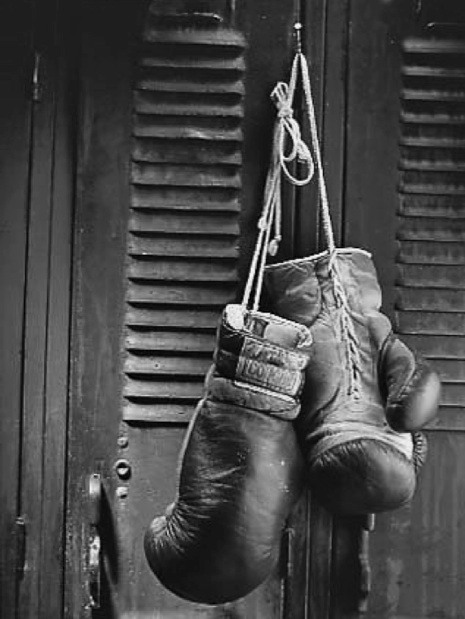
More than 30 years ago, there was a well-known, hard hitting boxer named Eugene “the Cyclone” Hart. Hart was heavily favored to win his next bout against a supposedly ungifted puncher, Vita Antuofermo. It was said that the only thing that Antuofermo could do was that “he bled well.” But, here’s the important thing, he had good attributes that you couldn’t see.”
During the fight, Hart dominated Antuofermo, knocking him all over the ring, giving him punishing blows and vicious punches. Antuofermo absorbed the punishment that was dealt to him by his naturally superior opponent, and he did it so well, that Hart became discouraged. In the fifth round, Hart began to tire, not physically but mentally. Taking advantage of the situation, Antuofermo attacked and delivered a series of quick punches that knocked Hart down and out, thus ending the fight.
“When the fighters went back to their makeshift locker rooms, only a thin curtain was between them. Hart’s room was quiet, but on the other side he could hear Antuofermo’s cornerman talking about who would take the fighter to the hospital. Finally he heard Antuofermo say, “every time he hit me with that left hook to the body, I was sure I was going to quit. After the second round, I thought if he hit me there again, I’d quit. I thought the same thing after the fourth round. Then he didn’t hit me no more.”
“At that moment, Hart began to weep. It was really soft at first. Then harder. He was crying because for the first time he understood that Antuofermo had felt the same way he had and worse. The only thing that separated the guy talking from the guy crying was what they had done. The coward and the hero had the same emotions. They’re both humans.”
The important question to ask yourself here is this: how did each man respond to the tough situation that they were experiencing? Maybe you are in an arduous position right now or, if not, one might be coming. How will you react? Like a hero or a coward?
How many of us have ever known someone that we really didn’t like? They were someone that we considered our rival, our opponent, our enemy. If we were given the chance, we would “take care of them”, hurt or destroy them. But how many of us have ever been in a situation that we could actually take take out our hate and anger on our enemy…then decided to show mercy and take the honorable thing…take the high road and help them?
Today’s tale is a true story that took place during World War 2 in the skies over Europe. It is my hope that you can learn a simple lesson today…that having compassion and mercy for our enemies actually takes more boldness and courage than to take revenge.
Charlie Brown was a B-17 Flying Fortress pilot with the 379th Bomber Group at Kimbolton, England. His B-17 was called “Ye Old Pub” and was in a terrible state, having been hit by flak and fighters. The compass was damaged and they were flying deeper and deeper into enemy territory instead of heading home to Kimbolton.
After flying the B-17 over an enemy airfield, a German pilot, Franz Steigler was ordered to take off and shoot down the B-17.
When he got closer the B-17, he could not believe his eyes. In his words, he “had never seen a plane in such a bad state”. The tail and rear section was severely damaged, the tail gunner was wounded and the top gunner was all over the top of the fuselage. The nose of the plane was smashed and there were holes everywhere.
Despite having ammunition, Franz flew to the side of the B-17 and looked at the English pilot, Charlie Brown, and saw that Brown was scared and struggling to control his damaged and blood-stained plane.
Aware that they had no idea where they were going, Franz waved at Charlie to turn around 180 degrees. Franz escorted and guided the stricken plane back to the North Sea and to England. He then saluted Charlie Brown, turned away and headed back towards Europe.
When Franz landed he told his commanding officer that he had shot down the B-17 over the sea, and never told the truth to anyone.
Meanwhile, back in England, Charlie Brown and the remains of his crew told everyone at their briefing what had happened, but were then ordered never to talk about it.
More than 40 years later, Charlie Brown wanted to find the German Luftwaffe pilot who had saved his crew. After years of research, Franz was finally found. He had never talked about the incident, not even at post-war reunions. The two pilots met in America at the 379th Bomber Group reunion…together with 25 people who are now alive…all because Franz showed mercy and compassion and never fired his guns that day.
When asked why he didn’t shoot them down, Stigler later said, “I didn’t have the heart to finish off those brave men. I flew beside them for a long time. They were desperately trying to get home and I was going to let them do that. I could not have shot at them. It would have been the same as shooting a man in a parachute.”
—————
“Compassion and tolerance are not a sign of weakness but a sign of strength.” ~ Dalai Lama
Many of us struggle with a times of trouble or hardship during their lifetime. There are two directions that a person can go when they are experiencing a tough situation: they can either learn from it and become stronger because of what they have learned…or they can become negative, bitter and dwell on the quagmire of pessimism.
The people that make up their minds to overcome a bad situation by working hard and remaining focused on the task-at-hand, usually find themselves becoming a better, happier person despite of their unfortunate circumstance.
Thus is the story that I found recently on totalprosports.com that tells the tale of a successful boxer who competed almost 90 years ago. His story is a great reminder to us the importance of enjoying the things that you do and when unpleasant times come your way…you can overcome ANYTHING…if you put your mind to it!!
Billy Miske (1894-1924) was by all accounts one of the most under-appreciated boxers of his era. He had a record of 48-2-2, which included wins against some of the biggest names in boxing and losses to two champions. But it’s not Miske’s boxing prowess that makes his story inspirational. It’s his willingness and determination to make the ultimate sacrifice for his family.
You see, Miske was diagnosed with a terminal kidney disease by his doctor, given 5 years to live, and told to retire. However, because he knew his family was depending on him financially, he kept jumping the ring and told no one—not even his wife—about his illness. Eventually, after a one-round knockout loss to the great Jack Dempsey, he finally decided to call it quits. But just 11 months later, with his family struggling to get by, Miske somehow conned promotors into giving him a huge fight.
By this time, he could barely walk and thus could not train for the fight. Nevertheless, he entered the ring and knocked out his younger opponent in the 4th round. He took the $2,400 he earned to buy back furniture he hap pawned several years ago, as well as some toys for his kids and a piano for his wife. Then he died just a week later at the age of 29.
Think about that next time you complain about your job.
It happens to the best of us. One minute your sat comfortably enjoying your time on Earth and the next you want to flip all the tables you can get your hands on. Maybe it was something someone said, perhaps it was a memory from a fight you’d had that morning: either way you’re about one irritating noise away from going on a rampage.
Never fear! We have the answers! Here are 12 tips and tricks you can use to boost your mood no matter how blue you’re feeling:
Tell Somebody
If you’re feeling down, call a loved one or friend. Nothing is more precious than someone who can cheer you up no matter how bad you’re feeling, and if they are truly your friends then they’ll do their best to make everything better! They know you’d do the same for them.
Get Moving
Clear your mind and refresh your thoughts by partaking in some light exercise! Walk about, dance, or run on the spot even for a few minutes and you’ll feel better in no time. Exercise releases endorphins, distracts from any worries you may be mulling over and raises your energy levels almost instantly.
We know not everyone can simply jog out of his or her office or start doing jumping jacks in a meeting, but there’s no reason you can’t do some stretching. Lift your arms and legs or stretch them out, touch your toes; hell if you’re feeling brave do some yoga positions!
Go Outside
Nothing is more cleansing than fresh air and sunlight, in fact there are numerous studies that show those who adopt an outdoor lifestyle show significantly less symptoms of depression and anxiety than those who work indoors all day. Spending a few minutes in the sun will raise your vitamin D – also known as the ‘sunshine vitamin’ – levels, which are crucial for physical and mental well-being.
Just Breathe
Take a minute out of your day to just relax and take some deep breaths. Partaking in just a few deep breathing sessions a day reduces stress, rids your body of 70% of toxins, aids digestion, helps you to let go of tension and increases the oxygen levels in your blood.
Simply try breathing in for five seconds, feeling your diaphragm expand and air fill your lungs, then hold that breath for another five seconds before slowly exhaling. Do this a few times and you’ll feel the control and happiness coming back to you.
Leave The Negative People Behind
There’s nothing more detrimental to your attitude than being surrounded by negative people. This may be in real life, online or in your phone: either way it’s time to let go of the downers. Ridding yourself of toxic people is not selfish, it is a form of self-care that will make you happier in the short and long term.
Work On A Task That Means Something To You
Whether it’s a lingering assignment you’ve yet to complete or a work of passion you haven’t had time for, now’s the time to sit and work on something important to you. By lifting the weight of a burden off of your shoulders or indulging in something you love, you’ll be filled with satisfaction and boost your mood.
Eat Something Tasty
If it’s close to lunchtime or you haven’t eaten in a while, you may just be crabby because you’re hangry (that’s hungry and angry). Get a snack, let it settle for five minutes and then get on with your day. Chances are you’ll be feeling better already.
Drink Some Water
Dehydration can cause low mood, headaches and fatigue so make sure you drink a lot of water throughout the day to keep your mood at it’s best!
Help Someone Else
Chances are you’re not the only one feeling blue right now. Try writing a nice email, Facebook message or Tweet to someone you care about, maybe even write a general status that’ll cheer everyone who reads it up. Doing a good deed is often the quickest way to make ourselves’ smile and feel better.
10. Change Your Environment
Did you know that the colours you surround yourself with could impact on your mood? For example, blues and greens are meant to be soothing shades, whereas yellows and reds create energy. If you’re feeling sleepy or anxious, perhaps purchase some colour-coded happiness! Even better, buy a plant: they filter the air around you making the oxygen cleaner and richer, boosting productivity.
Another easy way to boost your mood is to organize your belongings. Decluttering creates space in your area and in your mind, so why not have a quick tidy up.
11. Get Creative
Writing, drawing, listening to music, watching a funny show or reading some motivational posters are bound to make you feel better. If you’re prone to luls throughout your day, perhaps you should make a playlist that you can listen to when you notice your mood shift, or keep a pen and notepad handy for doodles and writing. If all else falls Google ‘funny cats’.
12. Take A Step Back
If you’re still not feeling your best, then it may be time to take a step back and look at your life. Write a list of three things that you are grateful for or simply take a moment to think about how things could be worse. Remember that you are in control and give yourself permission to change the things you are not satisfied with in your life, including your mood towards it.
Photo Credit: Gerald Klein (Nations Park Home Plate) via Wikimedia Commons
I recently came across a fantastic story written by Coach Sperry, that a couple of friends of mine sent to me via Face Book. I thought that it was something that should certainly be shared with everyone and worth the read…especially parents and coaches.
In Nashville, Tennessee, during the first week of January, 1996, more than 4,000 baseball coaches descended upon the Opryland Hotel for the 52nd annual ABCA convention.
While I waited in line to register with the hotel staff, I heard other more veteran coaches rumbling about the lineup of speakers scheduled to present during the weekend. One name, in particular, kept resurfacing, always with the same sentiment — “John Scolinos is here? Oh man, worth every penny of my airfare.”
Who the heck is John Scolinos, I wondered. Well, in 1996 Coach Scolinos was 78 years old and five years retired from a college coaching career that began in 1948. No matter, I was just happy to be there.
He shuffled to the stage to an impressive standing ovation, wearing dark polyester pants, a light blue shirt, and a string around his neck from which home plate hung — a full-sized, stark-white home plate. Pointed side down.
Seriously, I wondered, who in the hell is this guy?
After speaking for twenty-five minutes, not once mentioning the prop hanging around his neck, Coach Scolinos appeared to notice the snickering among some of the coaches. Even those who knew Coach Scolinos had to wonder exactly where he was going with this, or if he had simply forgotten about home plate since he’d gotten on stage.
Then, finally …
“You’re probably all wondering why I’m wearing home plate around my neck. Or maybe you think I escaped from Camarillo State Hospital,” he said, his voice growing irascible. I laughed along with the others, acknowledging the possibility.
“No,” he continued, “I may be old, but I’m not crazy. The reason I stand before you today is to share with you baseball people what I’ve learned in my life, what I’ve learned about home plate in my 78 years.”
Several hands went up when Scolinos asked how many Little League coaches were in the room. “Do you know how wide home plate is in Little League?” After a pause, someone offered, “Seventeen inches,” more question than answer.
“That’s right,” he said. “How about in Babe Ruth? Any Babe Ruth coaches in the house?”
Another long pause.
“Seventeen inches?”came a guess from another reluctant coach.
“That’s right,” said Scolinos. “Now, how many high school coaches do we have in the room?” Hundreds of hands shot up, as the pattern began to appear. “How wide is home plate in high school baseball?”
“Seventeen inches,” they said, sounding more confident.
“You’re right!” Scolinos barked. “And you college coaches, how wide is home plate in college?”
“Seventeen inches!” we said, in unison.
“Any Minor League coaches here? How wide is home plate in pro ball?”
“Seventeen inches!”
“RIGHT! And in the Major Leagues, how wide home plate is in the Major Leagues?”
“Seventeen inches!”
“SEV-EN-TEEN INCHES!” he confirmed, his voice bellowing off the walls.
“And what do they do with a a Big League pitcher who can’t throw the ball over these seventeen inches?” Pause. “They send him to Pocatello!” he hollered, drawing raucous laughter.
“What they don’t do is this: they don’t say, ‘Ah, that’s okay, Bobby. You can’t hit a seventeen-inch target? We’ll make it eighteen inches, or nineteen inches. We’ll make it twenty inches so you have a better chance of throwing the ball over it. If you can’t hit that, let us know so we can make it wider still, say twenty-five inches.’”
Pause.
“Coaches …”
Pause.
” … what do we do when our best player shows up late to practice? What do we do if he violates curfew? What if he uses drugs? Do we hold him accountable? Or do we change the rules to fit him? Do we widen home plate?
The chuckles gradually faded as four thousand coaches grew quiet, the fog lifting as the old coach’s message began to unfold.
Then he turned the plate toward himself and, using a Sharpie, began to draw something. When he turned it toward the crowd, point up, a house was revealed, complete with a freshly drawn door and two windows. “This is the problem in our homes today. With our marriages, with the way we parent our kids. With our discipline. We don’t teach accountability to our kids, and there is no consequence for failing to meet standards. We widen the plate!”
Pause. Then, to the point at the top of the house he added a small American flag.
“This is the problem in our schools today. The quality of our education is going downhill fast and teachers have been stripped of the tools they need to be successful….to educate and discipline our young people. We are allowing others to widen home plate! Where is that getting us?”
“And this is the problem in the Church, where powerful people in positions of authority have taken advantage of young children, only to have such an atrocity swept under the rug for years. Our church leaders are widening home plate!”
I was amazed. At a baseball convention where I expected to learn something about curveballs and bunting and how to run better practices, I had learned something far more valuable. From an old man with home plate strung around his neck, I had learned something about life, about myself, about my own weaknesses and about my responsibilities as a leader. I had to hold myself and others accountable to that which I knew to be right, lest our families, our faith, and our society continue down an undesirable path.
“If I am lucky,” Coach Scolinos concluded, “you will remember one thing from this old coach today. It is this: if we fail to hold ourselves to a higher standard, a standard of what we know to be right; if we fail to hold our spouses and our children to the same standards, if we are unwilling or unable to provide a consequence when they do not meet the standard; and if our schools and churches and our government fail to hold themselves accountable to those they serve, there is but one thing to look forward to …”
With that, he held home plate in front of his chest, turned it around, and revealed its dark black backside.
“… dark days ahead.”
Coach Scolinos died in 2009 at the age of 91, but not before touching the lives of hundreds of players and coaches, including mine. Meeting him at my first ABCA convention kept me returning year after year, looking for similar wisdom and inspiration from other coaches. He is the best clinic speaker the ABCA has ever known because he was so much more than a baseball coach.
His message was clear: “Coaches, keep your players — no matter how good they are — your own children, and most of all, keep yourself at seventeen inches.
There is nothing more precious than seeing the pure innocence and joy of a youngster. This photo is a terrific image of a little toddler enjoying his furry little friend.
It really does make you think what people would be like…as they get older…if they still had this kind of total happiness and joy throughout their lives. It just goes to show us once again, the importance of taking the time to enjoy the little things in life, staying focused on the positive, learn from the negative, and ALWAYS be thankful!
Remember: NO ONE IS IN CHARGE OF YOUR HAPPINESS EXCEPT FOR YOU!!!
We all love super heroes. When most of us were growing up, we always had a role model, someone we looked up to, or a super hero that we wanted to be when we grew up. It was fun thinking (and sometimes still do) about the awesomeness of having the super power to fly, leap higher than the tallest building, run faster than lightning, become bulletproof, and a host of other things.
Sometimes, unbeknownst to us, there are sometimes REAL super heroes in our midst…and we have no idea who they are! Such is the case of today’s story of a person that was a super hero despite of the “evil” said by others.
I am sure that today’s short story will touch your heart in a special way and, maybe, bring a tear to your eye…but it is a story and a lesson that you may never forget…
——————————
While sitting on a train one day, a young boy about 7 years old got on dressed as Superman. He had the biggest smile on his face…his eyes beaming…and joy just emanating from his soul. Suddenly, a heartless and callous man asked the boy, “Hey kid, you aren’t Superman! So why are you dressed up like him?”
The young boy just looked at him and said, “I may not look like Superman to you, but I’m going to see my mom who is very sick in the hospital and she smiles every time she sees me…so I’m her Superman…and that’s why I am dressed like this.”
One of my favorite things in life when I was younger was having a companion that was as close as a sibling, friend, or family member….my pet dog. We did everything together…go swimming, play soccer (he was the goalie), fishing, going on walks, etc. I remember how sad I was when I learned that my dad had to “put him down” after living a long dog’s life.
I used to think, “I wonder why dogs were given to us humans?”
Well, of all of the explanations that I ever heard, the following story is probably the best explanation that I ever heard. I hope you enjoy this short little story as much as I did!
—————–
Being a veterinarian, I had been called to examine a ten-year-old Irish Wolfhound named Belker. The dog’s owners, Ron, his wife Lisa, and their little boy Shane, were all very attached to Belker, and they were hoping for a miracle.
I examined Belker and found that he was dying of cancer. I told the family that we couldn’t do anything for Belker, and offered to perform the euthanasia procedure for the old dog in their home.
As we made arrangements, Ron and Lisa told me they thought that it would be good for six-year-old Shane to observe the procedure. They felt as though Shane might learn something from the experience.
The next day, I felt the familiar catch in my throat as Belker’s family surrounded him. Shane seemed so calm, petting his old friend for the last time, that I wondered if he understood what was going on. Within a few minutes, Belker slipped peacefully away.
The little boy seemed to accept Belker’s transition without any difficulty or confusion. We sat together for a while after Belker’s death, wondering aloud about the sad fact that animals lives are shorter than human lives.
Shane, who had been listening quietly piped up, “I know why.”
Startled, we all turned to him. What came out of his mouth next stunned me. I’d never heard a more comforting explanation. He said, “people are born so they can learn how to live a good life – like loving everybody all the time and being nice, right?”
The six-year-old continued, “Well, dogs already know how to do that, that’s why they don’t have to stay here as long.
Everyone needs a little giggle every once in a while…especially under stressful situations. Some situations can cause a great deal of stress while people…who read about that situation can do nothing more than giggle when they read about the poor soul’s situation.
Such is the case of today’s “Giggle of the Day.”
You pick up a hitchhiker… A beautiful girl.
Suddenly, she faints inside your truck and
you take her to the hospital.
Now that’s stressful.
But at the hospital, they say she is pregnant and
congratulate you that you’re going to be a father.
You say that you are not the father, but the girl says you are.
This is getting very stressful!
You request a DNA test to prove that you are not the father.
After the tests are completed,
The doctor says the test shows you’re infertile,
And probably have been since birth.
You’re extremely stressed but relieved.
On your way back home, you think about your 5 kids at home.
AFTER FLIGHT 77 hit the Pentagon on 9/11, the following incident occurred:
A chaplain, who happened to be assigned to the Pentagon, told of an incident that never made the news. A daycare facility inside the Pentagon had many children, including infants who were in heavy cribs. The daycare supervisor, looking at all the children they needed to evacuate, was in a panic over what they could do. There were many children, mostly toddlers, as well as the infants that would need to be taken out with the cribs.
There was no time to try to bundle them into carriers and strollers. Just then a young Marine came running into the center and asked what they needed. After hearing what the center director was trying to do, he ran back out into the hallway and disappeared. The director thought, “Well, here we are, on our own.”
About 2 minutes later, that Marine returned with 40 other Marines in tow. Each of them grabbed a crib with a child, and the rest started gathering up toddlers. The director and her staff then helped them take all the children out of the center and down toward the park near the Potomac River.
Once they got about 3/4 of a mile outside the building, the Marines stopped in the park, and then did a fabulous thing – they formed a circle with the cribs, which were quite sturdy and heavy, like the covered wagons in the Old West. Inside this circle of cribs, they put the toddlers, to keep them from wandering off. Outside this circle were the 40 Marines, forming a perimeter around the children and waiting for instructions. There they remained until the parents could be notified and come get their children.
The chaplain then said, “I don’t think any of us saw nor heard of this on any of the news stories of the day. It was an incredible story of our men there.” There wasn’t a dry eye in the room. The thought of those Marines and what they did and how fast they reacted; could we expect any less from them? It was one of the most touching stories from the Pentagon.
It’s the Military, not the politicians that ensures our right to life, liberty, and the pursuit of happiness. It’s the Military who salutes the flag, who serves beneath the flag, and whose coffin is draped by the flag. If you care to offer the smallest token of recognition and appreciation for the military, please pass this on and pray for our men and women, who have served and are currently serving our country, and pray for those who have given the ultimate sacrifice for freedom.